Twelve interviews.
Six patterns.
Primary research across artists, recent graduates, educators, and gallery professionals. The same six tensions kept surfacing. Click any finding to investigate deeper.
No marketing education
Gallery access is gatekept
Financial unsustainability
Weak industry exposure
Academic disconnect
Audiences don't seek art
Research Synthesis
The problem is not a lack of talent. It is structural. Artists operate in a system not designed for their sustainability trained in isolation, released into markets they were never taught to navigate.
Nobody designed
this system.
It just grew.
Galleries want collectors. Institutions want prestige. Collectors want investment returns. None of them prioritize supporting artists. The map shows how they connect and where artists get left behind.
Artist
Work stays isolated. Hard to earn.
Gallery
Needs famous artists for credibility. Excludes emerging artists.
Market
Prices go up for investment, not because art is good.
Institution
Funds established artists. Ignores new voices.
Education
Teaches how to make art. Not how to sustain yourself.
Audience
Wants to see art. Never gets the chance.
Six possible
futures.
The research produced multiple plausible responses. Each was examined seriously before one was developed. Expand each direction to see its logic and its limits.
Artist Income Cooperative
Business Skills in Art School
Online Art Marketplace
Campaign to Buy Original Art
Art Subscription Service
Art in Everyday Spaces
Paths Not Taken
Income Cooperative
Academic Intervention
Market Matching Platform
Awareness Campaign
Everyday Art Immersion
Selected Direction
Art Subscription
Service
The only direction that simultaneously addressed income velocity for artists and the zero-commitment aesthetic demand from venues without requiring behaviour change from either side.
Both audiences already wanted what they didn't know how to get. The platform would simply be the infrastructure connecting them.
Criterion
Solves both sides simultaneously no half-wins
Filter
No behaviour change required from end users
Test
Would a cafe owner sign up tomorrow? Would an artist?
Artist Experience
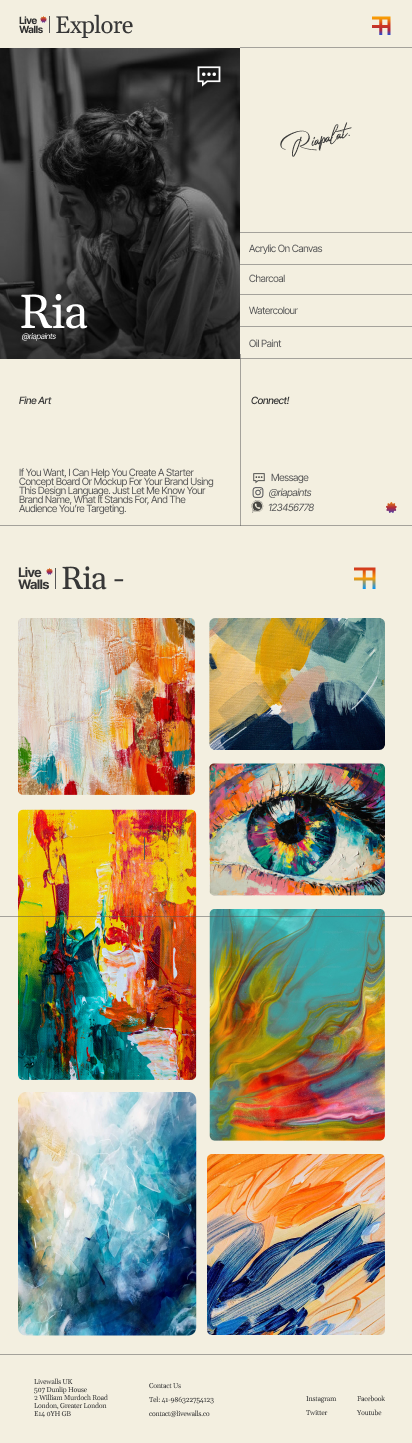
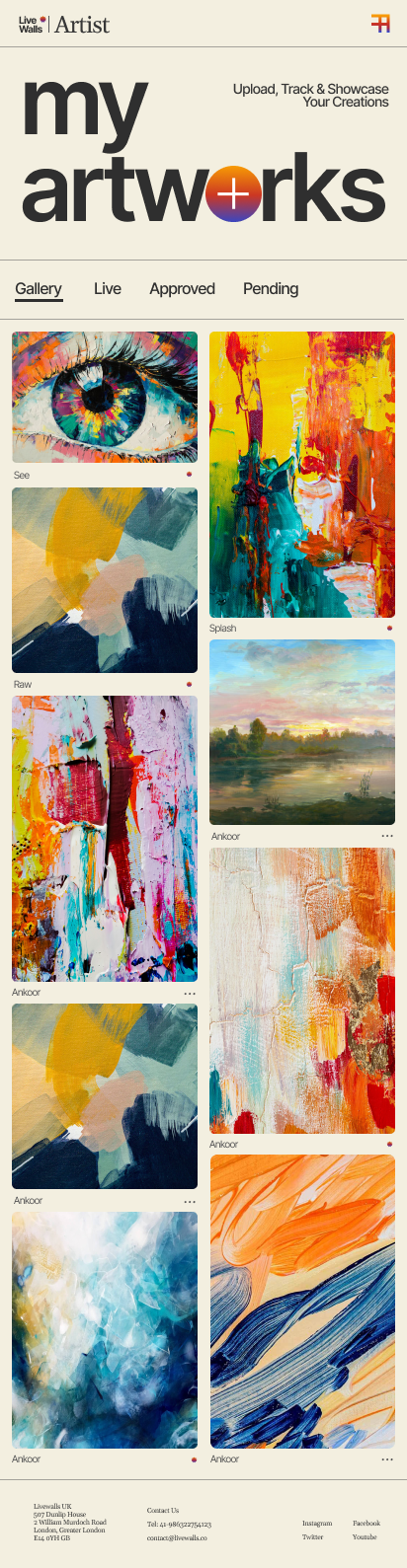
Upload original work with documentation
Platform matches to compatible venue profiles
Artwork enters tracked, insured circulation
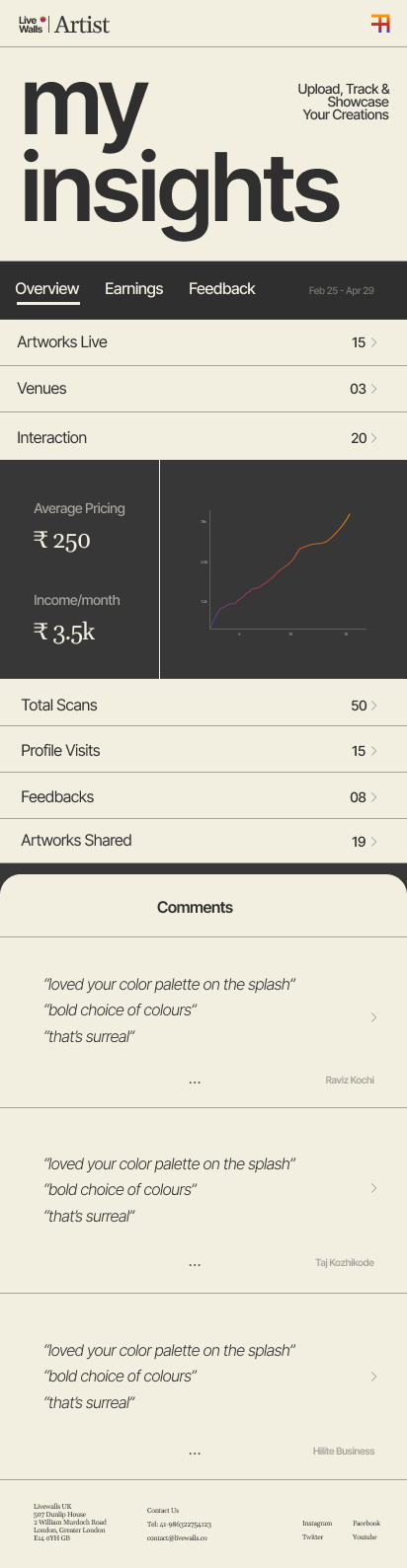
Monthly passive income no gallery required
Venue Experience
Subscribe to a rotation tier
Curated artworks delivered + installed
Rotated every 1-3 months by schedule
QR tags link guests to the artist story
Audience Experience
Encounter original art in everyday spaces
Scan QR to discover the artist
Follow, message, or commission directly
Art becomes part of the environment
Value Exchange
For Artists
Passive income + physical presence without gallery gatekeeping
For Venues
Living aesthetic identity without purchase cost, curation overhead, or insurance
For Audiences
Consistent, unintentional encounters with original art in daily life
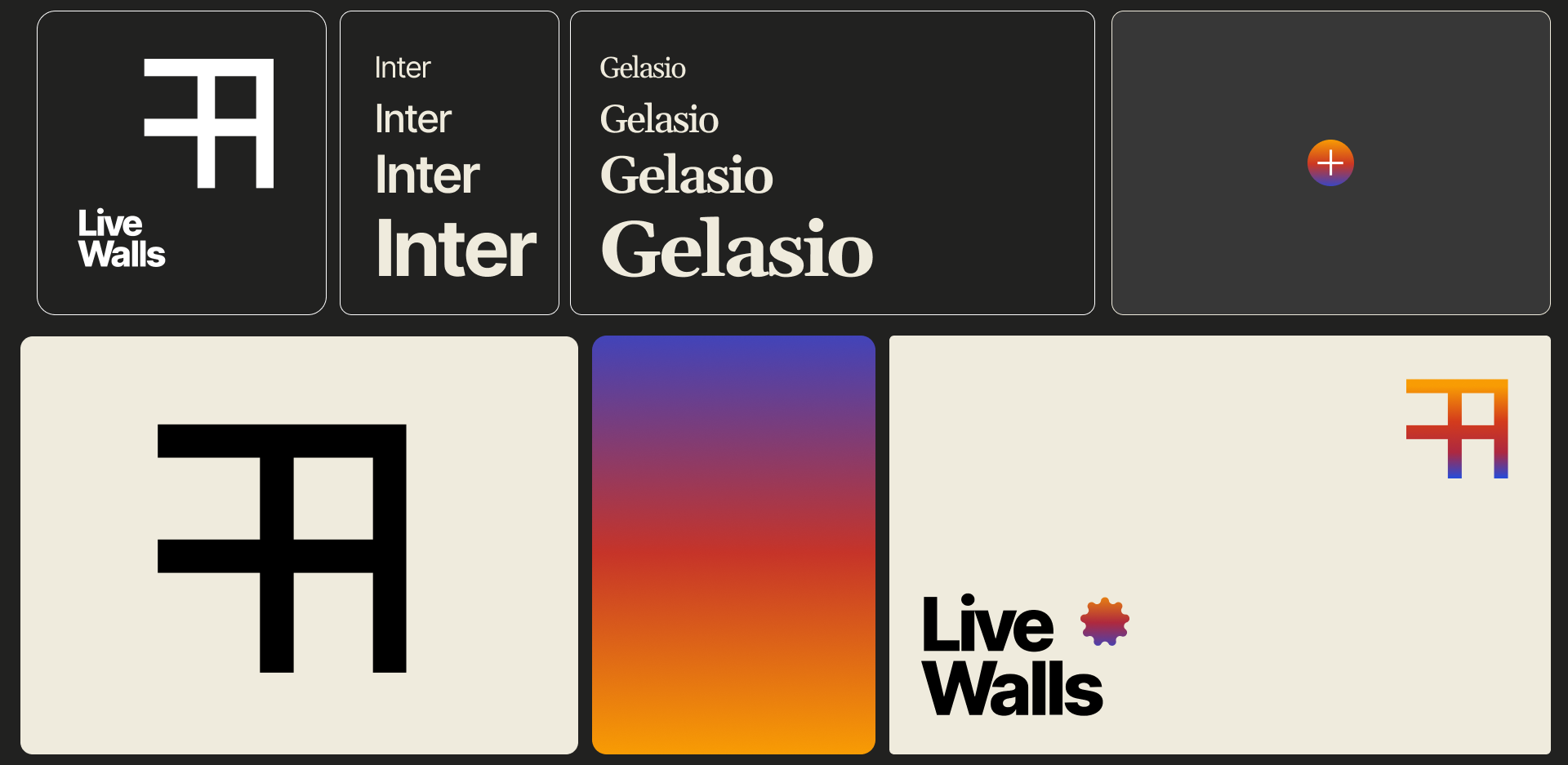
Two orthogonal walls meeting at a corner. Grid-locked. Scales from app icon to wall vinyl without reinterpretation.
Inter
Gelasio
Brand gradient #6B4EFF #FF6000
Ground #F5EFE4
Ink #1A1714

What the process
revealed.
The problem kept expanding
Every answer surfaced a new question. The income problem led to the visibility problem, which led to the structural problem. Learning to contain scope while honouring the complexity was the hardest design decision.
The solution didn't solve everything
Live Walls addresses income and visibility. It doesn't fix education structures, gallery gatekeeping, or the speculative art market. A service can be useful without being universal.
Two-sided adoption remains the real risk
Without artist supply, there are no venues. Without venue demand, artists have no reason to upload. Chicken-and-egg problems in two-sided markets require aggressive seeding strategies something a thesis can propose but not test at scale.
Role
Service Designer Brand UI/UX
Year
2024 B.Des Thesis
Deliverables
Research Strategy Identity Interface
Scope
End-to-end two-sided platform